Start with a model and a complete operating specification
A stainless steel solenoid valve is an electrically operated on/off valve. To request a standard or custom version, specify the fluid, temperature, inlet and outlet pressure, required flow, body and seal materials, connections and electrical supply. A stainless body alone does not establish chemical compatibility, hygienic suitability or a particular certification.
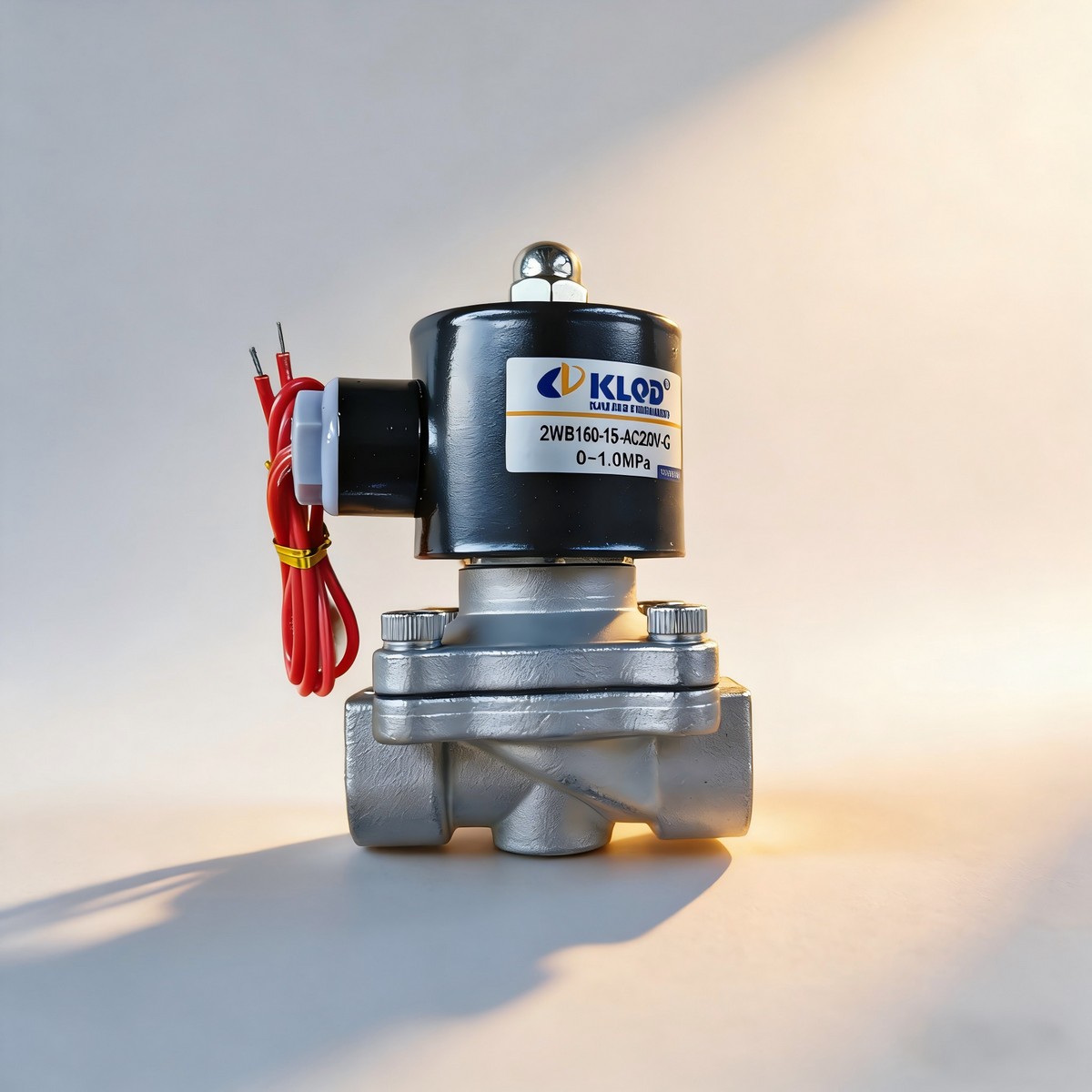
Use Kailing's 2WB stainless fluid solenoid valve page as a starting point for model specifications and the current product PDF. Confirm the exact ordering code before treating a catalog option as part of your quotation.
Select the valve family before requesting customization
For compact electrical switching of a compatible liquid, compare the 2WB series against your pressure differential and flow requirement. For a flanged installation, review the 2WBF flanged stainless fluid solenoid valves and send the flange standard and dimensions.
If the project uses pneumatic actuation for a process line, compare the KLJZF angle seat valve family. It uses a different control arrangement. Include available pilot-air pressure, required shutoff behavior and the exact fluid and temperature. The angle seat valve vs solenoid valve guide explains the selection questions.
Do not transfer coil power, response time or service-life figures from a pneumatic directional valve to a fluid solenoid valve. Request evidence for the exact model and operating conditions.
Specify body material and seals together
Send the chemical name, concentration, contamination level, normal temperature and cleaning conditions. Ask Kailing to confirm the wetted body and seal combination for that duty. A material name such as 304, 316 or 316L is a specification to verify; these grades are not interchangeable labels.
The current 2WB product information provides the catalog starting point. If the project requires a different grade, a particular material document or a traceability procedure, list it as a requirement for review. Do not assume that every catalog model includes it.
For food and beverage equipment, distinguish utility water, cleaning liquid and direct product contact. Use the filling and packaging application guide to separate those circuits before selecting a valve.
RFQ checklist for a stainless steel solenoid valve
| Requirement | Information to send | Confirmation needed before ordering |
|---|---|---|
| Medium | Fluid name, concentration, viscosity and particles | Compatibility of all wetted materials and seals |
| Pressure | Minimum and maximum inlet/outlet pressure | Model-specific operating pressure differential |
| Flow | Target flow rate and allowable pressure drop | Orifice and flow data for the exact model |
| Temperature | Normal, maximum and cleaning temperature | Seal and complete-valve operating limits |
| Connection | Port size, G/NPT or flange standard, drawing | Exact connection and installation dimensions |
| Electrical supply | AC/DC voltage, frequency where applicable, connector | Coil specification and operating duty |
| Operating sequence | Normally closed/open, cycle rate and loss-of-power behavior | Available model and control arrangement |
| Environment | Indoor/outdoor, washdown and exposure conditions | Appropriate enclosure and installation requirements |
| Documentation | Required material, test and market-specific documents | Availability and applicability to the quoted model |
| Commercial details | Quantity, sample requirement and delivery destination | Quoted scope, lead time and minimum order quantity |
What to agree for a custom request
- Send the operating checklist, a drawing or an existing valve reference. Mark mandatory requirements separately from preferred options.
- Ask which needs can be met by a catalog configuration and which require engineering review. Confirm materials, connections, coil and installation envelope in writing.
- Agree the sample scope and acceptance method. Define the fluid or test medium, pressure, temperature and checks needed for your project.
- Confirm the final ordering code, drawing revision, document package, quantity and delivery terms before placing the production order.
Sample availability, custom configurations, minimum order quantity and lead time need a project-specific quotation. This guide does not establish a fixed prototype schedule or certification package.
Questions buyers ask
Is a stainless steel valve suitable for every corrosive fluid?
No. Confirm compatibility using the exact medium, concentration, temperature and wetted materials. The body, seals and other wetted parts all matter.
Can I specify 316L instead of the catalog body material?
Include 316L and the required material documentation in your RFQ. Availability needs written confirmation for the exact model or custom proposal; a 304 or 316 description does not confirm 316L.
Can one pressure rating be used for every size and medium?
No. Read the model-specific table and provide inlet and outlet pressure. Different models, media and operating states can have different limits.
What are the MOQ and sample lead time?
Request a quotation for your configuration, quantity and sample acceptance requirements. These are confirmed for the project, not fixed by this guide.
Request a model and specification review
Send the completed checklist and any drawings. Identify the requirement that a standard model does not meet so the review can focus on the necessary change.
Product references
- 2WB series specifications and current product PDF
- 2WBF flanged stainless fluid solenoid valves
- KLJZF pneumatic angle seat valves
Selection guidance reviewed on 28 September 2026. Confirm the current model data and quotation before ordering.
Need a quotation?
Send the page link, quantity, drawings and working conditions to Kailing for review.