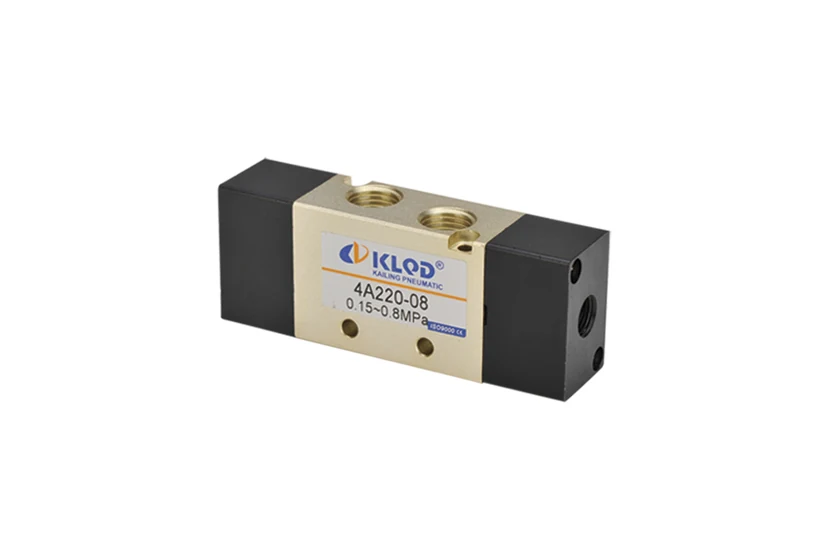
The first number is the number of main ports; the second is the number of switching positions. A 2/2 valve switches one flow path, a 3/2 valve supplies and exhausts one working port, and a 5/2 valve alternates air between two working ports.
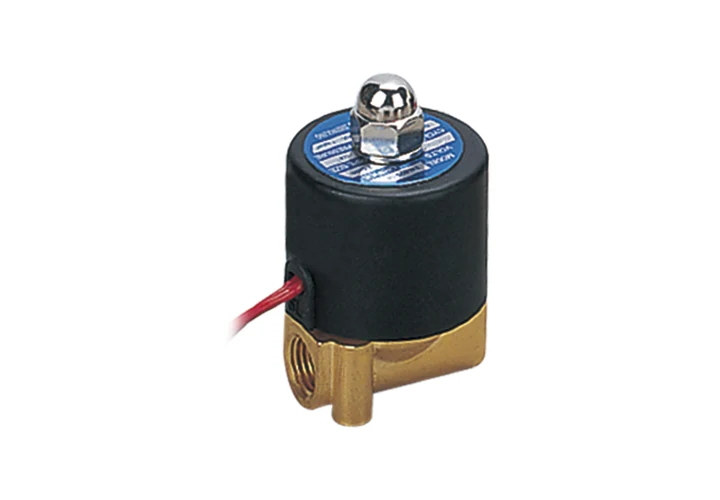
Read the function before the thread size
A matching thread and coil voltage do not make two valves interchangeable. Start with the circuit symbol and identify the supply, working and exhaust ports. Then check the normal state and how the valve returns or holds position when its control signal changes.
| Function | Typical task | Check before selection |
|---|---|---|
| 2/2: two ports, two positions | Open or close one fluid path | Medium, normally closed/open action, flow and differential pressure |
| 3/2: three ports, two positions | Supply and exhaust a single-acting cylinder or pilot circuit | Normal connection, exhaust route, air pressure and control method |
| 5/2: five ports, two positions | Alternate air supply to a double-acting cylinder or actuator | Two working ports, exhaust flow, single/double control and mounting |
2/2 for fluid on/off control: start with 2W or 2WB
For a water, air or other compatible fluid line needing one on/off path, review the 2W brass fluid valve family and 2WB stainless fluid valve family. Select by the exact model row, body and seal compatibility, pressure differential and required flow. A two-port shutoff valve does not by itself provide the exhaust function of a directional pneumatic circuit.
Normally closed means closed in the de-energized state; normally open means open in that state. Confirm the selected model supports the required action. Neither label substitutes for a review of the complete machine sequence.
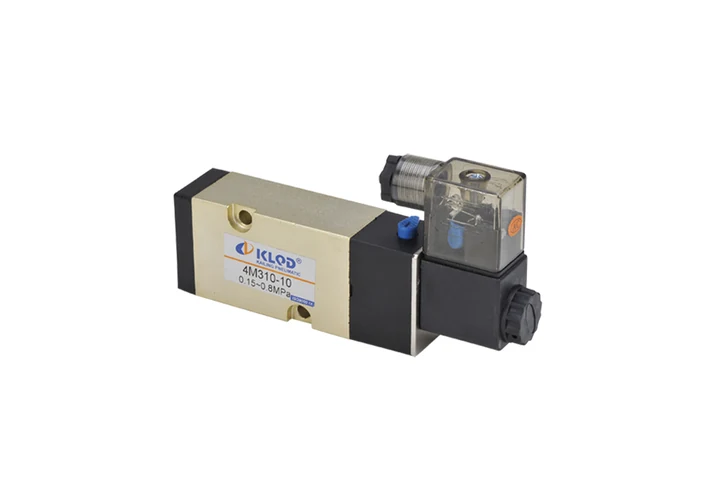
3/2 for one air working port; 5/2 for two
A 3/2 circuit can feed a single-acting device in one position and exhaust it in the other. For double-acting motion, a 5/2 circuit alternates which working port receives supply air. Check the diagram rather than counting external connectors alone.
The 4V200 product page and catalog matrix distinguish two-position single-control and double-control models from three-position variants. The 4V210-08 and 4V220-08 examples therefore need a control-method check; a 4V230 center variant is not simply another name for a 5/2 valve. Use the linked model table to verify the proposed code and do not apply its compressed-air rating to a liquid process line.
Replacement checklist
Send the existing nameplate and circuit symbol, medium, port markings, thread standard, working pressure, coil voltage and connector, mounting dimensions and photos of the connected tubing. State whether the device is single acting or double acting and what must happen when power or air is lost. Include required cycle rate and flow if the current device moves too slowly.
For actuator packages, use the double-acting versus spring-return guide before choosing the air-control valve. This prevents selecting a directional valve independently of the actuator and process requirements.
| Parameter | Value |
|---|---|
| 2/2 valve | Simple on-off flow path control. |
| 3/2 valve | Single-acting cylinder or pilot signal control. |
| 5/2 valve | Double-acting cylinder or pneumatic actuator control. |
| Voltage | Confirm DC 12 V, DC 24 V, AC 110 V or AC 220 V. |
| RFQ data | Port count, port size, pressure, photos, old model and actuator type. |
Frequently Asked Questions
- FAQ Can a 2/2 valve replace a 3/2 valve?
Not as a direct functional replacement: a 3/2 valve provides a separate exhaust route. Confirm the complete circuit before substitution. - FAQ Does 5/2 mean five switching positions?
No. It means five main ports and two switching positions. - FAQ Is 4V200 suitable for a water line?
Its published working medium is filtered air. Use a fluid-valve model with confirmed water compatibility for a water circuit.
Need a quotation?
Send the page link, quantity, drawings and working conditions to Kailing for review.