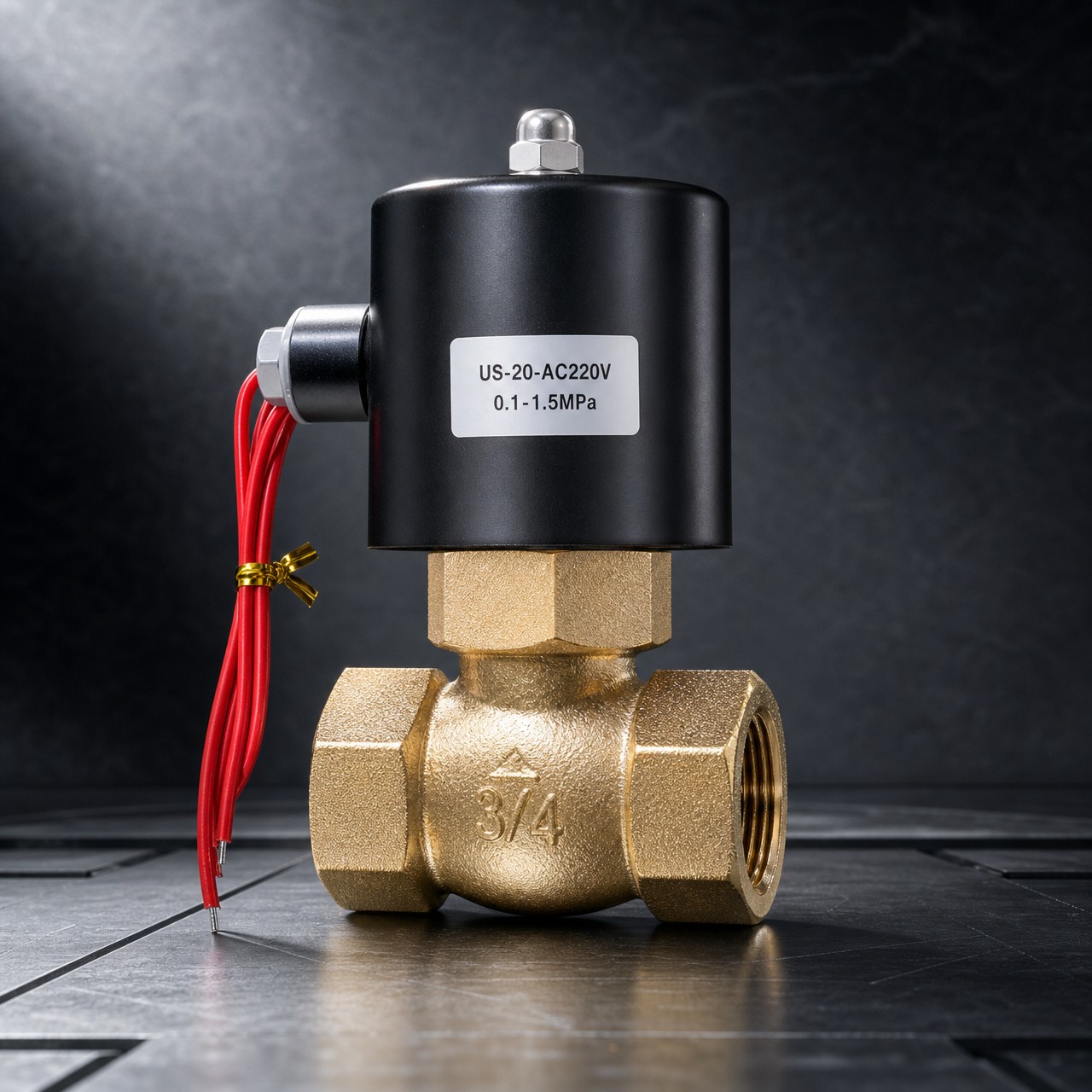
For US(2L) selection, confirm steam conditions, minimum and maximum pressure differential, operating construction, body/seal configuration and coil. Use the exact product table and PDF; a family temperature range is not approval of every configuration for every steam duty.
Start with the operating conditions, not just pipe size
The US(2L) steam solenoid valve page and its linked product PDF are the starting references. Send normal and maximum steam temperature, inlet pressure, downstream pressure, required flow and connection size. Include startup and shutdown conditions, when the pressure difference may be unlike steady operation.
State whether the service involves saturated steam, superheated steam or hot water, and describe any cleaning cycle separately. These conditions should be reviewed against the selected construction and complete valve rating rather than merged into a single “high temperature” requirement.
Distinguish pilot-operated and direct-acting requirements
The published US(2L) reference separates pilot-operated and direct-acting working-pressure entries. Select the applicable model/construction before applying a limit. If the inlet and outlet pressures can equalize, ask how the proposed valve operates in that condition and whether it meets the required opening sequence.
| Operating detail | Why it belongs in the request |
|---|---|
| Minimum inlet and maximum outlet pressure | Establishes the lowest available differential during the cycle |
| Maximum inlet pressure | Helps check the selected model's operating limit |
| Required steam flow and units | Enables a model-capacity review beyond pipe size |
| Startup and shutdown sequence | Identifies equalization, condensate and transient conditions |
| Switching frequency and on-time | Defines the intended valve and coil duty |
Do not copy the pilot entry onto a direct-acting model or assume all sizes share the same operating range. If the product summary and proposed PDF cover different variants, request the exact model row in the quotation.
Match the complete material and seal package
The product reference lists PTFE and VITON temperature information. That is a reason to identify the quoted seal, not a reason to assume both are interchangeable or that their listed upper temperatures apply to every steam condition. Confirm medium compatibility, temperature and pressure together for the complete assembly.
Also provide body-material requirements and installation environment. A stainless body alone does not establish hygienic approval. Requirements for special enclosures or certification must be supported by documents covering the exact coil and valve configuration.
Review installation and control details
Provide flow direction, installation orientation, connection standard, available space and the proposed power supply. Identify the required de-energized state and response to power loss. Ask the responsible system designer to review condensate management and pressure transients for the actual steam line; replacing a valve does not correct every system problem.
If pneumatic actuation is being considered, compare the KLJZF angle seat valve using its own pilot-air and process requirements. The angle seat versus solenoid comparison explains the control-method difference.
RFQ package
Send the chosen catalog model or PDF page, steam conditions, inlet/outlet pressure range, flow, port standard, body/seal request, voltage, normal action and quantity. Add the existing nameplate and installation drawing for a replacement. Request written confirmation of the proposed configuration, supporting documents and commercial terms.
Frequently Asked Questions
- FAQ Can every US(2L) configuration use the same temperature limit?
No. Check the exact construction, seal, medium and operating pressure together. - FAQ Why is downstream pressure needed?
The inlet-to-outlet pressure difference affects selection and can change during startup or shutdown. - FAQ Does the steam series name remove the need for a model review?
No. Supply the complete duty and confirm the exact ordering code and applicable data.
Need a quotation?
Send the page link, quantity, drawings and working conditions to Kailing for review.