How to Choose a Pulse Jet Solenoid Valve for Baghouse Dust Collection: Sizing, Materials & Custom OEM Guide
slug: how-to-choose-a-pulse-jet-solenoid-valve-for-baghouse-dust-collection-sizing-materials-cus
Direct Answer
A pulse jet solenoid valve releases a short, high-pressure compressed-air burst to clean the filter bags in a baghouse dust collector. To choose one, match the valve port and flow coefficient (Cv) to your pulse pipe and air volume, pick an aluminum or brass body for the gas and environment, and confirm the working pressure and coil voltage (DC24V or AC110/220V). A right-angle (embedded) type fits most baghouses; a straight-through type is used where piping space allows.
What Is a Pulse Jet Solenoid Valve?
A pulse jet solenoid valve is an electrically controlled valve used in baghouse dust collectors and other pulse-jet cleaning systems. When the controller sends a signal, the valve opens briefly and admits a burst of compressed air into the blow pipe. The air expands through the nozzles, shaking the dust cake off the filter bags.
Unlike a process solenoid valve that stays open for the full flow, a pulse valve is designed for frequent, short, high-flow bursts. This demands a fast response, a large flow coefficient, an airtight diaphragm, and a body that can cycle reliably without leakage.
How a Pulse Jet System Works
In a typical baghouse, dirty gas enters the hopper and passes through the filter bags. Dust accumulates on the outer surface, increasing the differential pressure across the collector. When the pressure drop reaches a set point, the controller fires a pulse valve for the cleaning row. The high-pressure air travels down the blow pipe and out through the nozzles, creating a shock wave that flexes the bags and dislodges the dust cake.
Selecting the correct valve for each cleaning row is a balance of air volume, pressure, and timing. An undersized valve will not clean the bags adequately; an oversized one wastes air and can damage the bags.
Key Selection Parameters
| Parameter | What to confirm | Why it matters |
|---|---|---|
| Port size | Match blow pipe diameter | Right air volume per pulse |
| Working pressure | Typical baghouse range | Clean, reliable blow-off |
| Coil voltage | DC24V, AC110/220V | Matches your control system |
| Body material | Aluminum / brass | Weight, corrosion, pressure rating |
| Flow coefficient (Cv) | Size for air volume | Ensures full bag cleaning |
| Operating temperature | Check with manufacturer | Protects diaphragm and seal life |
| Diaphragm material | NBR / EPDM / FKM | Media and temperature compatibility |
| Connection type | G thread / flange | Fits your manifold |
Right-Angle vs Straight-Through (Embedded)
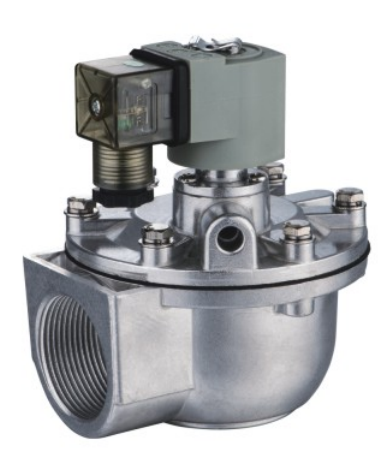
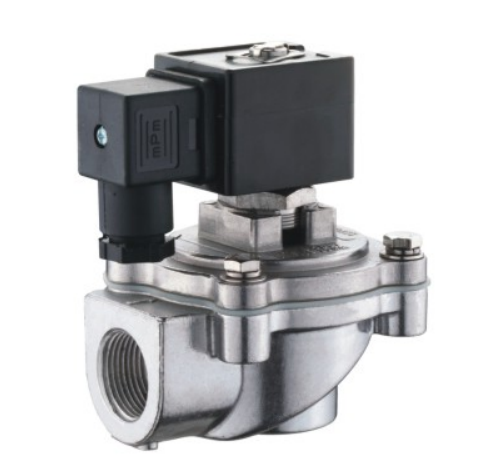
Right-angle (embedded) pulse valves are the most common in baghouses. The valve installs directly into the manifold or blow pipe and turns the air 90 degrees into the nozzle. They are compact, easy to service, and widely available.
Straight-through pulse valves have inlet and outlet in line. They offer the lowest pressure loss and are used where piping layout permits, often in larger or high-flow systems.
Application and Environment
Confirm the cleaning gas (usually compressed air, sometimes nitrogen or inert gas in explosive or food-grade plants), the ambient temperature, and whether the unit sits in a dusty, humid, or corrosive area. For food or pharmaceutical lines, choose a body and diaphragm compatible with the process and cleaning agents. For explosive atmospheres, use an appropriately rated coil and enclosure.
How Many Bags Per Valve
The number of bags each valve can clean depends on bag size, length, and air volume per pulse. One valve typically serves one cleaning row, with the blow pipe and nozzles sized for that row. To size accurately, provide the manufacturer with your bag count, bag diameter and length, and the pulse pressure so they can recommend the correct port and Cv.
FAQ
1. How many filter bags can one pulse valve clean? A common rule is one valve per cleaning row of bags, with the pulse pipe sized accordingly. Size the valve's Cv to the total air volume it must deliver to that row, and confirm with the manufacturer using your bag count and dimensions.
2. What working pressure do I need? Most pulse jet systems run within a typical operating range. Too low a pressure will not remove the dust cake; too high can damage bags or increase air consumption. Start at the manufacturer's recommended range and adjust based on the measured differential pressure.
3. How often should I replace the diaphragm? Diaphragm life varies with cycle frequency, temperature and media. Inspect it for cracks and wear during routine maintenance and keep spares on hand. Confirm the exact replacement interval with the manufacturer.
Custom OEM Guidance
Since 2003, Ningbo Kailing Pneumatic Co., Ltd (KLQD) supplies pulse jet solenoid valves for baghouse and dust-collection systems, including custom port sizes, coil voltages and diaphragm materials for OEM projects. When you send an RFQ, include the pulse pipe diameter, working pressure, voltage, bag count and the media so we can recommend the right port and materials.
Sources
- Manufacturer specification data for pulse jet solenoid valves (Ningbo Kailing Pneumatic Co., Ltd, since 2003). Reviewed for port, pressure and voltage ranges.
- Industry practice for baghouse pulse-jet cleaning sizing (verified with field application notes).
- Note: The above ranges are typical reference values. Confirm the exact rating for your model before ordering.
Request a Quote
Tell us about your dust-collection system — pipe size, pressure, voltage and bag dimensions — and we will send a tailored recommendation and quotation. Use the RFQ form on our website.
Need a quotation?
Send the page link, quantity, drawings and working conditions to Kailing for review.