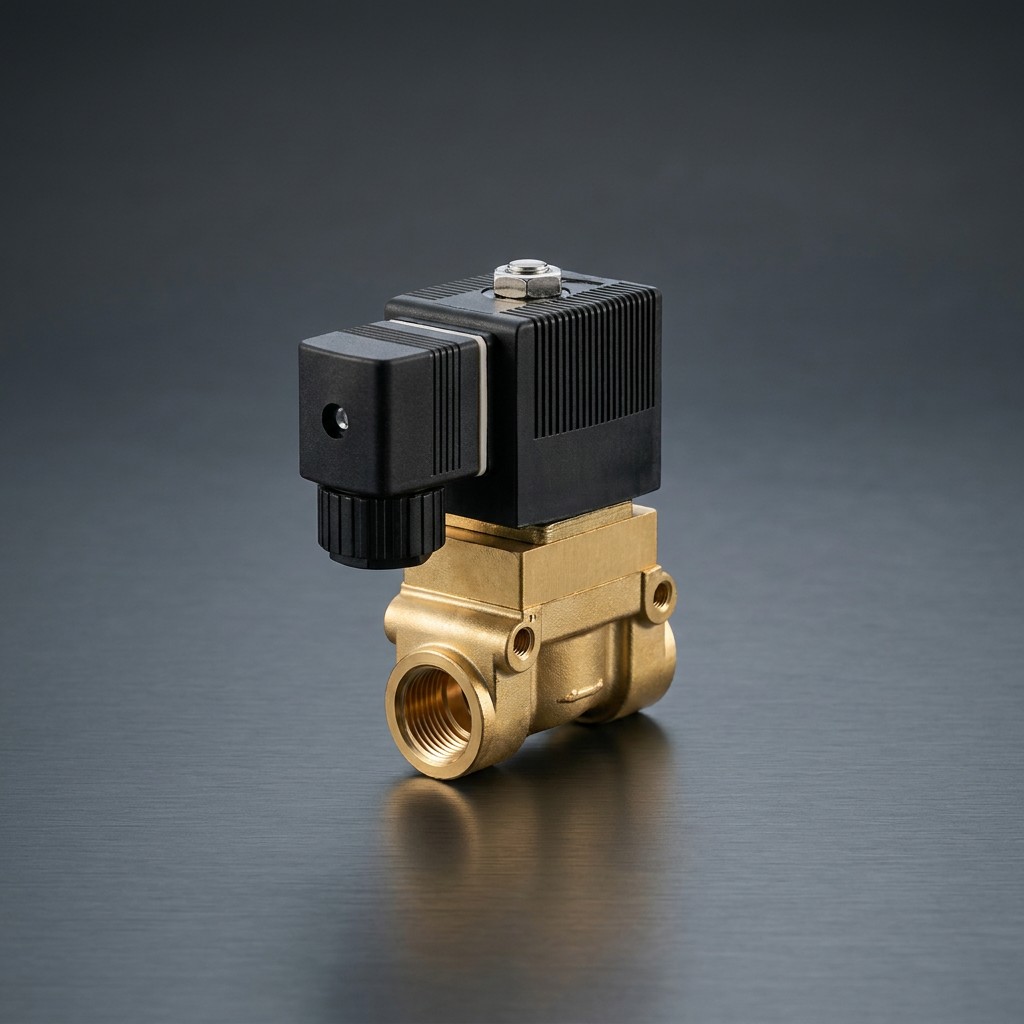
The pressure rating comes first because it affects every part of the valve. The body needs to contain the pressure, the seals need to hold it at the seat, and the coil needs to generate enough force to lift the plunger against the pressure difference. A valve that is under-rated can pass a quick test and then leak or stick in service once the system pressure peaks. Treat the rated working pressure as a ceiling, not a target to approach.
Direct-acting or pilot-operated
The two main constructions behave differently. A direct-acting valve opens with the coil alone and works from zero pressure drop, which suits small ports and small flows. A pilot-operated valve uses the medium's own pressure to open a larger main orifice and handles bigger flows, but it needs a minimum pressure drop. If the system pressure can fall below that differential, a pilot valve may not open, so confirm the minimum differential pressure for your line.
Reading the pressure rating correctly
Manufacturers list pressure in MPa, bar or psi, and the figure usually refers to the maximum working pressure for a given medium and temperature at the port. Look for both the working pressure and the proof or burst pressure, which is much higher and is not a normal operating limit. In a cycling service the pressure range matters as much as the maximum, because repeated swings from high to low stress the seat and the plunger.
Seal and body materials
Seal choice drives compatibility. Common options include NBR (nitrile) for cool air, water and oil; EPDM for hot water; FKM/Viton for oils and many chemicals; and PTFE for aggressive media. Body material matters too. Brass is economical for clean water and air, while stainless steel is a common choice for corrosive media and higher pressures. Confirm the body's rated pressure as well as the port size.
Pressure and temperature together
A valve's pressure rating depends on temperature. As the temperature rises, the safe working pressure of the body and seat generally drops. For a hot and pressurized medium, check the combined pressure/temperature rating from the manufacturer's data rather than reading the two numbers separately.
What to confirm before a quote
- Medium and its pressure — maximum working pressure and the minimum differential the valve opens against.
- Temperature — continuous and peak value, to confirm the pressure/temperature rating.
- Flow — required Cv and one-way or two-way flow.
- Voltage — AC or DC and the control-circuit level.
- Port size and connection — thread type and diameter.
- Function — normally open or normally closed, two-way or three-way.
- Environment — ambient temperature, dust, moisture and duty cycle.
Typical high-pressure uses
- High-pressure cleaning and wash-down — direct-acting valves with stainless bodies.
- Hydraulic and test stands — confirm rated pressure and coil sizing.
- Gas and compressed air — check seal compatibility with the specific gas.
- Water treatment and dosing — stainless bodies with seals matched to the chemical.
- Process and chemical lines — PTFE or FKM seals with corrosion-resistant bodies.
Selection checklist
| Parameter | What to confirm | Why it matters |
|---|---|---|
| Maximum working pressure | Rated MPa/bar of the valve | Should exceed system peak pressure |
| Differential pressure | Min and max across the seat | Decides direct-acting vs pilot |
| Medium | Water, air, oil, gas or chemical | Seal and body compatibility |
| Temperature | Continuous and peak (°C) | Combined pressure/temperature rating |
| Body material | Brass or stainless steel | Corrosion and pressure rating |
| Seal material | NBR, EPDM, FKM or PTFE | Pressure hold and media compatibility |
| Flow / Cv | Required flow coefficient | Correct sizing |
| Voltage | AC/DC and level | Matches the control circuit |
| Port size | Thread type and diameter | Fits existing pipework |
Request a quotation
If you are sourcing a high-pressure solenoid valve for cleaning, hydraulic, gas, water treatment or a process line, send the medium, maximum working pressure, differential pressure, temperature and voltage, plus whether you need a standard part or a custom build. A Kailing sales engineer will reply with a specification and quotation, usually within one working day.
Sources
- General engineering selection guidance for solenoid valves (pressure rating, direct-acting vs pilot-operated, seal compatibility) — compiled for buyer reference; specific ratings should be confirmed against the manufacturer's data sheet.
- Ningbo Kailing Pneumatic (KLQD) product parameters for 2W / 2WB solenoid valve series — manually confirmed against the current catalog.
Frequently Asked Questions
- FAQ What pressure can a high-pressure solenoid valve handle?
The rating depends on the model, the medium and the temperature. A solenoid valve is normally rated for a stated maximum working pressure for a given medium and temperature, and that figure should exceed the system's peak pressure. For high-pressure service, confirm the combined pressure/temperature rating and whether a direct-acting or pilot-operated construction matches your minimum differential pressure. Verify the exact number with the manufacturer before ordering. - FAQ Can Kailing build a custom high-pressure solenoid valve?
Yes. Ningbo Kailing Pneumatic (KLQD) manufactures solenoid valves in its 2W and 2WB series and supports OEM/ODM programs built to your drawing. Share the medium, maximum working pressure, differential pressure, temperature, voltage, port size, material and quantity, and a sales engineer will confirm the matching series and seal options for your conditions.
Need a quotation?
Send the page link, quantity, drawings and working conditions to Kailing for review.