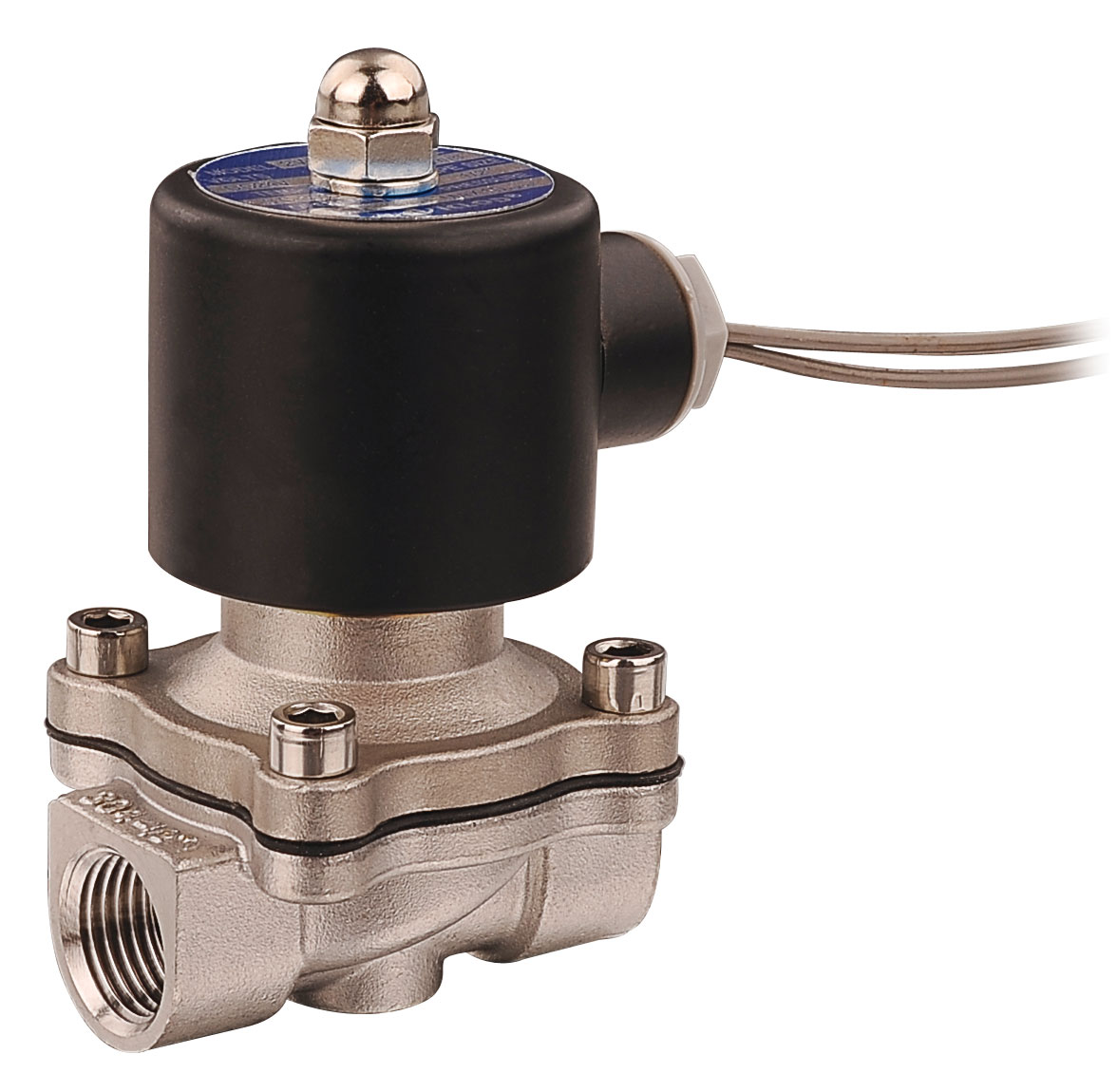
High Flow 2 Inch Stainless steel Solenoid Valve DN50 24VDC 220VAC for Desalination Seawater Reverse Osmosis System Anti Corrosion
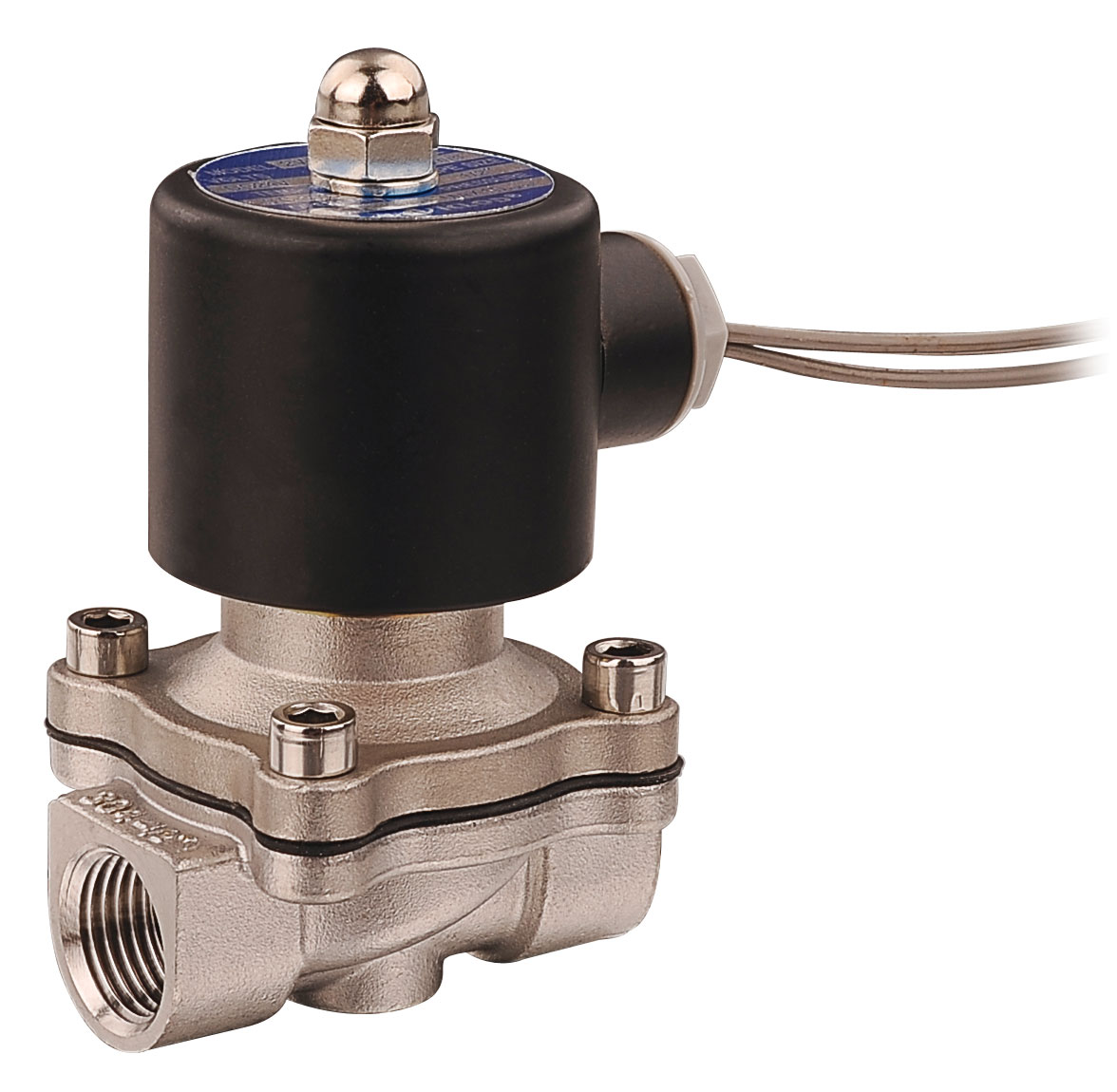
The Kailing 2WB500-50 is the largest threaded model in the 2WB series of stainless steel fluid solenoid valves: a 2 inch (DN50, G2) direct-acting diaphragm valve with a 50 mm orifice and CV 48, built for pure water, weak acid, weak alkali and mildly corrosive media. With a 304 stainless steel body (316 on request), a choice of NBR, EPDM, FKM or silicone seals, a 0–0.7 MPa water pressure rating, and AC 220 V or DC 24 V coils as standard, it covers the low-pressure shutoff duties of a seawater desalination or reverse osmosis (RO) plant: intake and feed water lines, filter backwash, permeate flush, CIP loops and dosing transfer.
This guide explains where a DN50 anti-corrosion water solenoid valve fits in an RO system, where it does not, and the six checks that decide a reliable selection — body material, seal, pressure class, flow, voltage and connection.
Key takeaways
- 2WB500-50 = 2 in (DN50, G2) port, 50 mm orifice, CV 48 — the highest-flow threaded model in the 2WB stainless steel solenoid valve series.
- Direct-acting diaphragm design opens from zero pressure differential; normally closed as standard, normally open available on selected models.
- 304 stainless steel body (316 on request) with NBR, EPDM, FKM or silicone seals.
- Water pressure 0–0.7 MPa; ambient −5…+60 °C; IP65 square coil option (code S) for humid plant rooms.
- AC 220 V and DC 24 V coils standard (full range: AC 24/110/220/380 V, DC 12/24/36/110/220 V); threaded G2/NPT connection, flanged 2WBF options for flanged piping.
Key data at a glance
| Parameter | 2WB500-50 |
|---|---|
| Port | G2 (2 in / DN50); G (BSP) or NPT thread |
| Orifice | 50 mm |
| CV value | 48 |
| Action | 2/2-way direct-acting diaphragm |
| Body material | Stainless steel 304 (316 on request) |
| Seal / diaphragm | NBR, EPDM, FKM or silicone |
| Water pressure | 0–0.7 MPa (7 bar) |
| Media temperature | Seal-dependent, see table below |
| Ambient temperature | −5 °C to +60 °C |
| Coil power | AC 28 VA / DC 24 W |
| Reference dimensions | D 166 × C 189 × A 156 mm |
Where a DN50 solenoid valve fits in a seawater RO plant
A seawater reverse osmosis train has two very different pressure worlds. The high-pressure side — membrane feed, brine reject and energy recovery — typically runs at 55–70 bar in an SWRO system. The low-pressure side — intake, pretreatment, permeate, flushing and cleaning — stays below 7 bar. The 2WB500-50 belongs to the second world: its water rating is 0–0.7 MPa, so it is the right inlet solenoid valve for low-pressure on/off duties such as:
- Intake and feed water shutoff — open/close on raw water lines before and after pretreatment filters.
- Filter backwash and rinse lines — automatic backwash sequencing of media and cartridge filters.
- Permeate flush and product water diversion — routing permeate to tank, drain or flush during start-up, shutdown and membrane flushing.
- CIP (clean-in-place) loop switching — directing cleaning solution around the low-pressure circuit between the CIP skid and the membranes.
- Dosing, sampling and drain lines — antiscalant and reducing-agent transfer plus low-pressure drain duties.
The most common and most expensive selection mistake is putting a 0–0.7 MPa valve on the high-pressure membrane feed. If your duty point is on the HP side, this is not your valve — select a high-pressure valve family for that line.
How to choose a 2 inch stainless steel solenoid valve for RO duty: six checks
Check 1 — Body material: 304 vs 316 stainless steel
The standard configuration is a 304 stainless steel body, which handles fresh water, permeate and most neutral process water. Where the line regularly carries seawater, brine or chlorinated water, ask for the 316 option: the added molybdenum improves resistance to the pitting and crevice corrosion through which seawater attacks stainless steel.
One warning belongs in every anti-corrosion valve selection: a stainless body alone does not guarantee chemical suitability. Corrosion resistance depends on the whole wetted path — body, diaphragm and seals — against your exact medium, concentration and temperature. Send the fluid data and confirm the body grade and seal combination for the quoted ordering code before you order.
Check 2 — Seal material decides chemical and temperature life
| Seal | Media temperature | Strengths | Limitations |
|---|---|---|---|
| NBR | −5…+80 °C | Economical, good with oils | Hot-water and ozone ageing; not for oxidizing media |
| EPDM | −10…+120 °C | Hot water, water-glycol, weak acid/weak alkali | Not for oils and fuels |
| FKM (VITON) | −10…+150 °C | Broad chemical resistance, chlorine exposure | Higher cost; confirm per medium |
| Silicone | −15…+150 °C | Wide temperature band | Lower mechanical strength than FKM |
Two notes for RO plants. First, the catalogued +150 °C ratings for FKM and silicone are printed for 25 mm and smaller sizes — for a DN50 valve, confirm the seal temperature rating for the actual model. Second, RO low-pressure duties in practice run at roughly 5–45 °C (membrane cleaning stays near 30–40 °C), so temperature is rarely the limiting factor; chemical compatibility with chlorinated water and antiscalant solutions is what to confirm. As a starting point, EPDM or FKM are the usual choices for water treatment duty, and NBR where oils are present.
Check 3 — Pressure class and the direct-acting advantage
Read the ratings that apply to the exact model: for the 2WB family, 0–0.7 MPa for water (normally closed), 0–0.8 MPa for normally open versions and 0–1.0 MPa for air. Ratings differ by model, medium and size, so always confirm the model row in the current datasheet instead of using the family maximum.
Direct-acting construction matters in RO duty. A direct-acting solenoid valve opens from zero pressure differential, so it works where a pilot-operated valve cannot:
- flush and drain lines that start with no head,
- gravity-fed tanks and siphon lines,
- valves that must open before the pumps build pressure,
- tight sealing at low differential.
The trade-off is coil power: at DN50 the coil draws AC 28 VA / DC 24 W — modest for the flow controlled, but larger than small direct-acting sizes. Check your PLC output or relay budget when many valves switch simultaneously.
Check 4 — Flow: what can CV 48 pass?
CV 48 is the catalogue value for the 2WB500-50. For water, estimate with Q ≈ Kv × √ΔP, where Kv ≈ 0.86 × Cv ≈ 41, Q in m³/h and ΔP in bar:
| Differential pressure | Estimated water flow |
|---|---|
| 0.1 bar | ≈ 13 m³/h |
| 0.2 bar | ≈ 18 m³/h |
| 0.5 bar | ≈ 29 m³/h |
These are engineering estimates for water at ambient temperature, not a guarantee; verify against the current datasheet and your line sizing. As a rule of thumb, keep the valve pressure drop below 5–10 % of the available line pressure. If your branch flow is far below about 15 m³/h at low differential, the smaller 2WB400-40 (1 1/2 in, CV 29) usually gives better control at a lower price — size the valve to the duty, not only to the pipe.
Check 5 — Voltage: 24 VDC or 220 VAC?
Both are standard catalogue coils, so this is a control-system decision:
- DC 24 V — matches PLC outputs, battery-backed emergency logic and safe-maintenance switching; the usual choice where valves are driven directly from the control system.
- AC 220 V — suits plants wired on AC distribution and longer cable runs with contactor-style control.
For humid plant rooms and washdown areas, add the square coil option (code S): IP65 dust-tight and water-jet protection. And respect the installation notes: −5…+60 °C ambient, with pipe ports mounted horizontal or inclined as the catalogue instructs.
Check 6 — Connection: threaded G2 or flanged?
The 2WB500-50 is threaded — G2 (BSP) or NPT. If your RO piping is flanged, the 2WBF flanged family is the companion range; the current catalogue table lists 2WBF15 to 2WBF40 (up to 40 mm orifice, CV 29). For a DN50 flanged installation, send the flange standard (e.g. EN 1092-1 or ASME B16.5), pressure class and bolt pattern for confirmation instead of assuming availability.
How to read the ordering code
Example: 2WB500-50-V-S-DC24V-NPT
- 2WB — stainless steel fluid solenoid valve (2WBF = flanged version)
- 500 — 50 mm orifice
- 50 — 2 in port
- V — FKM seal (E = EPDM; other seal codes per quotation)
- S — square IP65 coil
- DC24V — 24 V DC coil (AC220V also available)
- NPT — thread standard (G = BSP)
Frequently asked questions
Q1: Can the 2WB500-50 handle seawater directly? It is a stainless steel solenoid valve catalogued for pure water, weak acid, weak alkali and mildly corrosive media. Seawater, brine and chlorinated water are aggressive: order the 316 body option and confirm the seal against your salinity, chlorine level and temperature. Send the medium data first — suitability is confirmed per wetted material, not by body grade alone.
Q2: Can I put it on the RO high-pressure feed line? No. The water rating is 0–0.7 MPa (7 bar), while SWRO membrane feed runs at 55–70 bar. Use the 2WB500-50 on low-pressure duties — intake, pretreatment, backwash, permeate flush, CIP and dosing — and select a high-pressure valve family for the membrane feed.
Q3: Normally closed or normally open? NC valves shut without power and open when energized; NO valves do the opposite. Define what must happen on power failure — the fail-safe requirement is often the deciding factor — and confirm NO support for the model; NO versions are rated 0–0.8 MPa in the catalogue.
Q4: What flow can the valve pass? CV 48. Using Q ≈ Kv × √ΔP with Kv ≈ 41: about 13 m³/h at 0.1 bar, 18 m³/h at 0.2 bar and 29 m³/h at 0.5 bar differential (water, ambient temperature, estimated). Verify against the datasheet for your duty point.
Q5: Is 24 VDC or 220 VAC better for a desalination plant? Both are standard. DC 24 V integrates with PLC and battery-backed controls; AC 220 V suits AC-distributed plants and long cable runs. Choose the IP65 square coil (code S) for humid areas.
Q6: Do you support OEM or custom versions? Yes. Send the requirement the standard configuration does not meet, with a drawing and operating conditions; custom scope, documentation, sample lead time and commercial terms are confirmed in the quotation.
What to send for a fast quotation
- Medium and concentration (seawater percentage, chlorine, antiscalant)
- Operating and cleaning temperatures
- Minimum and maximum inlet/outlet pressure
- Required flow (m³/h) and line size
- NC or NO, and the required power-failure behaviour
- Connection: G2/NPT thread, or flange standard, class and bolt pattern
- Voltage (e.g. DC 24 V or AC 220 V) and coil protection (IP65 square coil)
- Quantity — then download the current 2WB product PDF and request a model review
Choosing a reliable high-flow stainless steel solenoid valve for a desalination RO system comes down to six confirmations: body grade, seal, pressure class, flow, voltage and connection. Send the duty conditions and the Kailing engineering team will review the exact 2WB model code with you before you order.
Need a quotation?
Send the page link, quantity, drawings and working conditions to Kailing for review.