Introduction
Selecting reliable fluid control components is one of the first decisions a B2B buyer or project engineer makes when designing pneumatic systems, automated production lines, or fluid handling skids. The market offers hundreds of series across multiple suppliers, and the differences are rarely obvious from catalog photos alone. At Kailing Fluid, we consistently hear four questions from OEMs and distributors: "Which valve fits my media?" "How do I confirm the specs before sampling?" "What certifications are supported?" and "Can I get technical drawings before ordering?" This article addresses those questions directly—with a standard buyer checklist, answers to the most common sourcing questions, and a real-world example from our product center. Whether you are evaluating a new supplier or standardizing components across multiple production sites, the structured approach below helps reduce mis-specification risk and shortens the procurement timeline.
What Are Fluid Control Components?
Fluid control components are industrial parts that regulate the flow, pressure, and direction of fluids such as compressed air, water, light oil, or neutral gases. The main categories include directional control valves (solenoid valves, pneumatic valves), pressure control valves, flow control valves, and process valves such as angle seat valves. In B2B supply chains, these components are usually specified by port size, flow coefficient (Cv or Kv), operating pressure range, body material, and seal material—not by consumer-facing ratings. Getting one parameter wrong can cause early seal wear, insufficient flow, or safety non-conformance. For engineers and procurement teams, the practical question is not just "what does this valve do" but "how do I confirm it works in my system before placing an order." This is where a structured buyer checklist becomes essential.
Buyer Checklist for Fluid Control Components
| Parameter | What to confirm | Why it matters |
|---|---|---|
| Media type | Compressed air, water, steam, oil, or chemical | Determines body and seal material (NBR, FKM, EPDM) |
| Operating pressure range | Minimum and maximum working pressure | Prevents under-performance or safety valve opening |
| Connection standard | Threaded (NPT, G, Rc) or flanged | Ensures direct fit without adapters |
| Actuation type | Direct-acting, pilot-operated, manual, or pneumatic actuator | Matches available control signal and response time |
| Flow coefficient (Cv/Kv) | Required flow rate at given pressure drop | Avoids undersized valve causing pressure loss |
| Certifications required | CE, RoHS, ATEX, ISO 9001 factory audit | Satisfies regional compliance and project specs |
| Documentation before sampling | 2D dimension drawing, 3D model, material certificate | Reduces trial sample cost and misunderstanding |
Use this checklist as a first-pass filter when comparing suppliers. At Kailing, our product center provides dimension sheets, flow curves, and material certificates for all standard series—this helps buyers lock the correct model within the first inquiry. For custom port sizes or non-standard actuation, the checklist also serves as a shared reference when communicating requirements with the engineering team.
FAQ: Common Questions When Sourcing Fluid Control Components
1. What is the typical MOQ for industrial fluid control components?
For standard solenoid valves and pneumatic angle seat valves, the minimum order quantity often starts at 10-50 pieces per model. Custom port size or actuator combination may have higher MOQs. Always confirm if the MOQ applies per model or per order total; some suppliers allow mixing series across a single purchase order.
2. How can I confirm the right model before sending a PO?
Request a 2D dimension drawing and a product data sheet that includes full specification on port size, voltage, pressure range, and flow coefficient. Compare these against your system requirements. If available, a 3D step model allows mechanical integration without physical samples. At Kailing, dimension sheets and product data are available for all standard series from the product center.
3. Do you provide samples or trial orders?
Yes, Kailing supports sample orders for most standard products. Lead time for samples typically runs 5-7 working days via international courier. Final production lead time depends on order volume and customization level. Contact our team with your target model to confirm current sample availability.
4. What information should I include in my first inquiry?
Include your media type (air, water, oil), operating pressure range, connection standard and size, required flow rate or Cv, and any certification requirements. If you have a photo or drawing of the existing component you are replacing, include that as well. Providing these details upfront helps the supplier return an accurate quotation rather than a generic catalog link.
Next Steps: Get Specification Support from Kailing
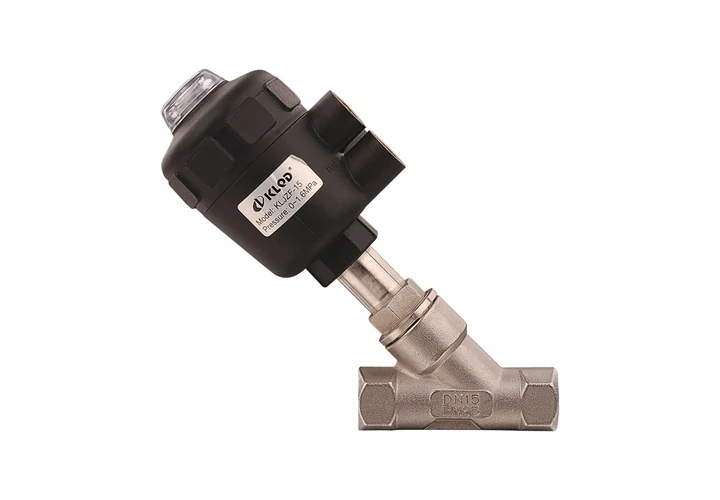
Browse our Pneumatic Component Catalog to see detailed series data sheets. If you already have a target model in mind, such as the KLJZF angle seat valve with threaded connections, you can request a dimension drawing directly from the product page. For project-specific selection, send your media type, pressure, and connection standard to our engineering team. We will return a shortlist of suitable fluid control components with supporting documents within 24 hours on working days.
Sources
- User material: Kailing pneumatic component product library and dimension sheets (KLJZF series).
- Official/industry source: Fluid power valve selection standards per ISO 5599-1 and general engineering practice.
- Manual confirmation needed: Specific certification validity per model and destination country—confirm with Kailing for current certificate copies.
Need a quotation?
Send the page link, quantity, drawings and working conditions to Kailing for review.